The Problem
Nutritional needs for women fluctuate significantly depending on their current menstrual phase (Menstrual, Follicular, Ovulatory, or Luteal). However, most existing health apps only track cycle dates without offering actionable, phase-specific health advice.
A major technical challenge in modeling this data is the Class Imbalance problem: The "Ovulation" phase is very short compared to the Luteal or Follicular phases, leading standard AI models to frequently misclassify or ignore it.
Our Approach
We developed a robust machine learning pipeline utilizing the XGBoost Algorithm to classify user data into specific cycle phases. To tackle the data imbalance, we implemented SMOTE (Synthetic Minority Over-sampling Technique), which generates synthetic data points for the underrepresented Ovulation phase.
- Data Processing: Utilized the Ogino method for ground-truth phase calculation and cleaned outliers using statistical visualization.
- Model Training: Applied Grid Search for hyperparameter tuning, optimizing the XGBoost model to handle complex, non-linear relationships in health data.
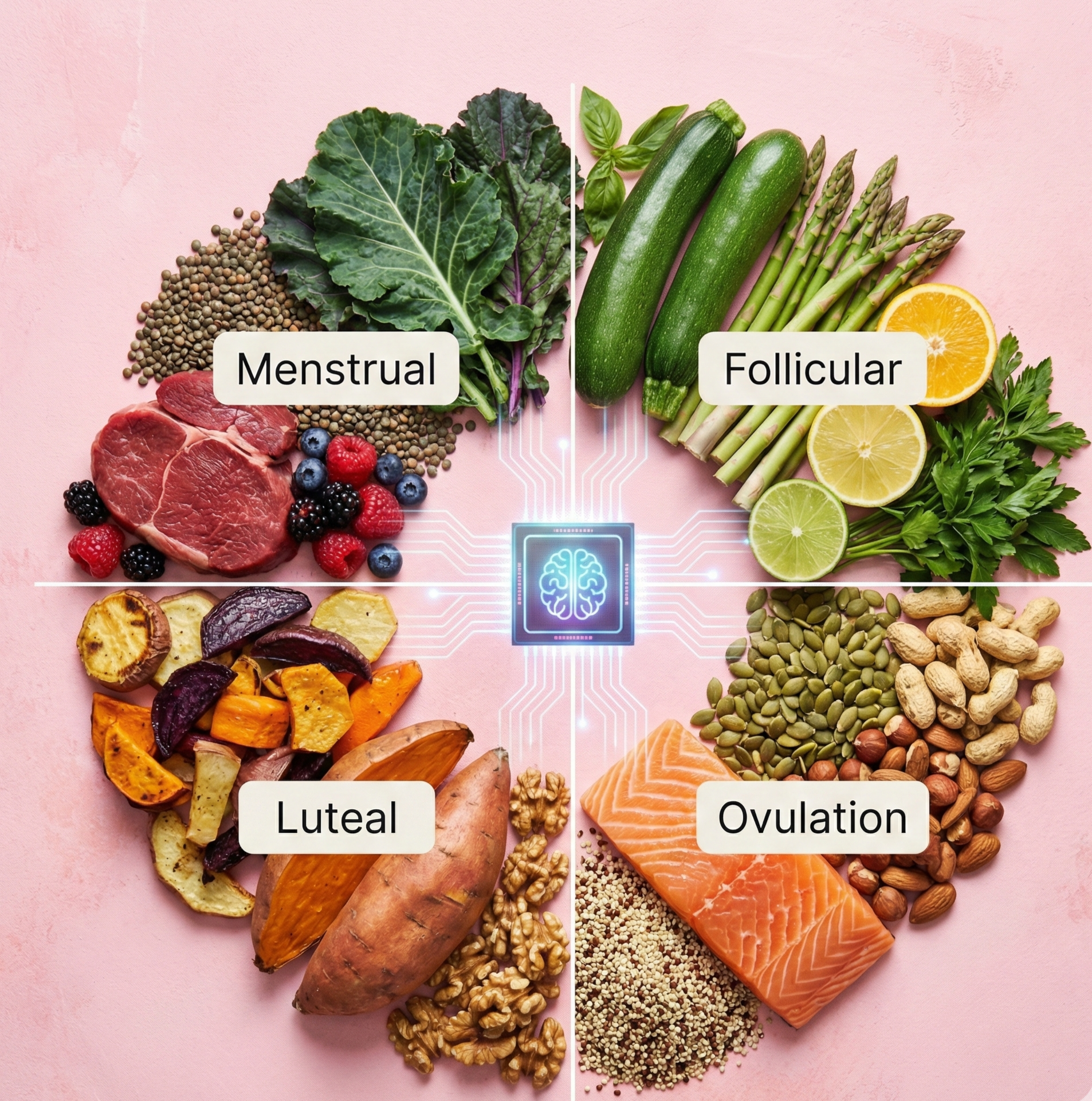
- Integration: Built a GUI that takes user inputs (Cycle Length, Menses Score) and outputs a tailored diet plan (e.g., recommending antioxidants during ovulation or iron-rich foods during menstruation).
Impact & Results
The final model achieved an impressive 99.39% accuracy, significantly outperforming baseline models (which hovered around 97%).
Why this matters:
- Holistic Well-being: By accurately predicting the cycle phase, we provide women with precise knowledge on what to eat to mitigate symptoms like fatigue, cramps, or mood swings.
- Reliability: The use of SMOTE ensured that the critical "Ovulation" phase—often the most important for fertility tracking—was predicted with high precision (Recall improved to 1.00).
- Personalization: The system adapts recommendations based on dietary preferences (Vegan, Vegetarian, Non-Veg), making healthcare accessible and actionable.